

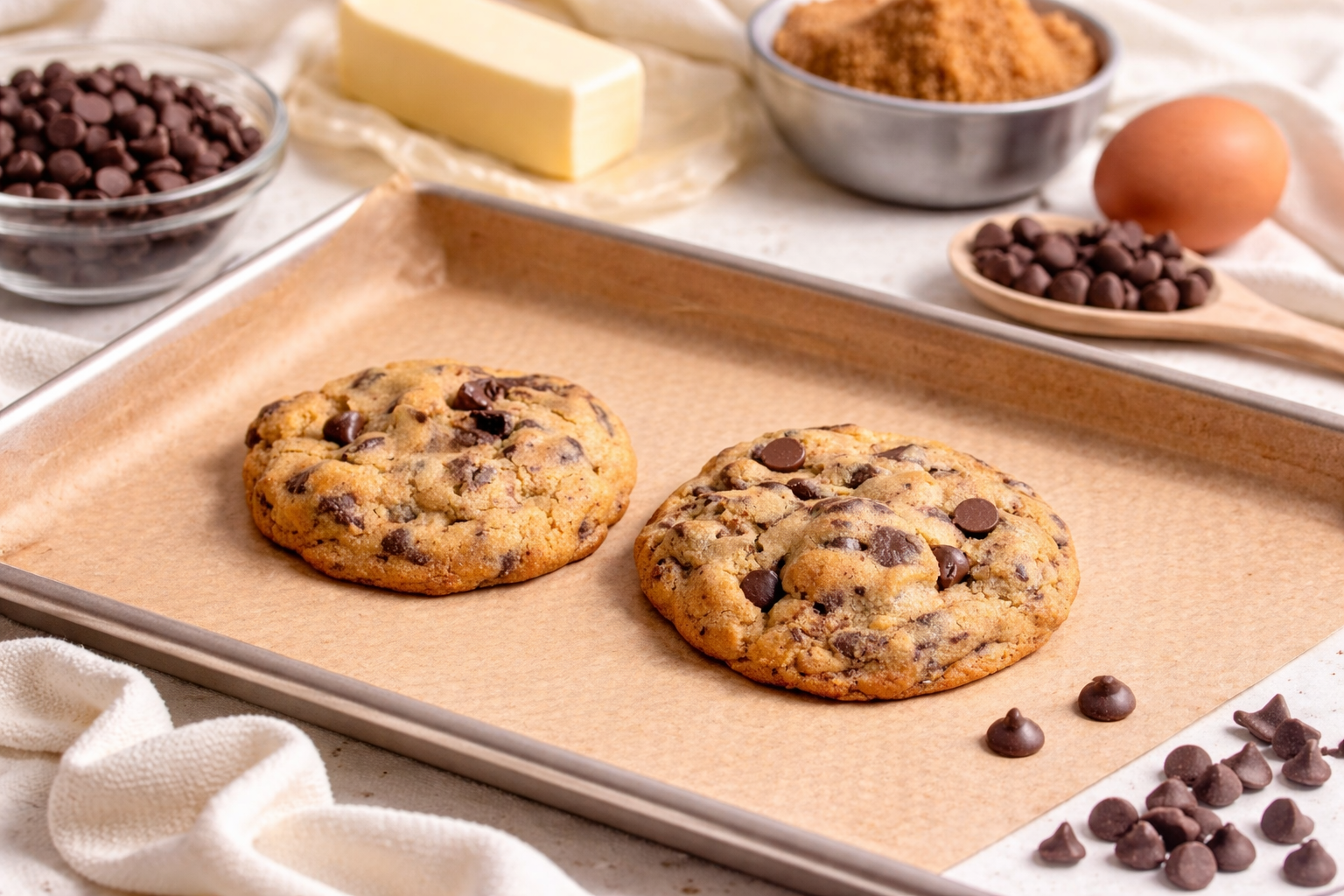
If you’ve ever tried to make thick, bakery-style cookies at home, you know how frustrating it can be when they spread into flat cookies instead.
You start with a scoop of dough that looks perfect… and then it melts into a thin cookie in the oven.
The good news is thick cookies aren’t just luck. They come down to a few specific techniques that control how your dough behaves as it bakes.
Once you understand what causes cookies to spread, you can start controlling the outcome and consistently bake thick, soft cookies at home.
The Short Answer: How to Bake Thick Cookies
To bake thick cookies:
- use cool or cold butter
- chill your dough before baking
- measure flour correctly
- use larger dough balls
- bake on cool pans
These steps slow down spreading and allow the cookie structure to set before the dough flattens.
What Makes Cookies Thick?
When cookies bake, two things happen at the same time.
Butter melts and the dough softens.
Flour and eggs begin forming structure.
If the butter melts too quickly, the cookie spreads before that structure can hold it together.
Thick cookies happen when the structure sets before the cookie has time to spread too much.
The 6 Key Secrets to Thick Cookies
1. Use Cool or Cold Butter
Butter that is too soft melts quickly in the oven and causes cookies to spread.
Using slightly cool butter slows that process down.
Tip: If your dough feels soft, chill it before baking.
2. Chill the Dough
Chilling dough is one of the easiest ways to get thicker cookies.
Cold dough spreads more slowly, giving the cookie time to set.
Tip: Chill dough for at least 30–60 minutes.
3. Measure Flour Correctly
Flour provides structure.
Too little flour = cookies spread more.
Tip: Use the spoon-and-level method instead of scooping directly from the bag.
4. Use Larger Dough Balls
Larger cookies naturally stay thicker in the center.
Smaller cookies spread faster and bake flatter.
Tip: Use larger scoops (4–5 oz) for bakery-style cookies.
5. Bake on Cool Pans
Warm baking sheets can start melting butter before cookies even go into the oven.
Tip: Let pans cool completely between batches.
6. Don’t Overmix the Dough
Overmixing can weaken the structure of your dough.
Tip: Mix just until ingredients are combined.
7. Mix-Ins Matter More Than You Think
This is one of the most overlooked factors in baking thick cookies.
Mix-ins like chocolate chips, chunks, and nuts don’t just add flavor—they actually help control how cookies spread.
Why Mix-Ins Affect Cookie Thickness
As cookies bake, the dough softens and spreads outward.
Mix-ins act like structure points inside the dough, helping slow down that spread.
Think of them as small barriers that help the cookie hold its shape.
How Mix-Ins Help Create Thick Cookies
- They add bulk and structure to the dough
- They help hold the cookie together as it bakes
- They reduce how far the dough can spread
- They create that chunky bakery-style texture
This is one of the reasons bakery cookies look thick and loaded.
The Biggest Mistake With Mix-Ins
Not using enough.
Dough with too few mix-ins behaves more like plain dough and spreads more easily.
How to Use Mix-Ins for Thick Cookies
- Use generous amounts of chocolate chips or chunks
- Choose larger mix-ins (chunks work better than mini chips)
- Distribute evenly throughout the dough
- Press extra mix-ins on top before baking
Best Mix-Ins for Thick Cookies
- chocolate chunks
- chocolate chips
- chopped chocolate bars
- nuts
- freeze-dried fruit
Quick Tip
More mix-ins = more structure = thicker cookies
Pro Baker Tips for Thick Cookies
- bake one tray at a time
- rotate the pan halfway through baking
- use parchment paper
- slightly underbake for soft centers
Common Mistakes That Make Cookies Flat
- butter that is too soft
- not chilling the dough
- too much sugar
- not enough flour
If you want a full breakdown of why cookies spread, read:
Troubleshooting
Why are my cookies still flat?
Your dough may still be too warm or you may need slightly more flour.
Why aren’t my cookies thick in the center?
Your dough balls may be too small.
Why do bakery cookies stay thick?
They use chilled dough, larger portions, and balanced ingredient ratios.
Just remember, Anyone can learn how to bake
Thick cookies aren’t complicated once you understand what controls spreading.
Small changes like chilling your dough, measuring ingredients carefully, and even using the right amount of mix-ins can completely transform your results.
Once you start controlling these factors, you’ll be able to bake thick, bakery-style cookies consistently at home.