

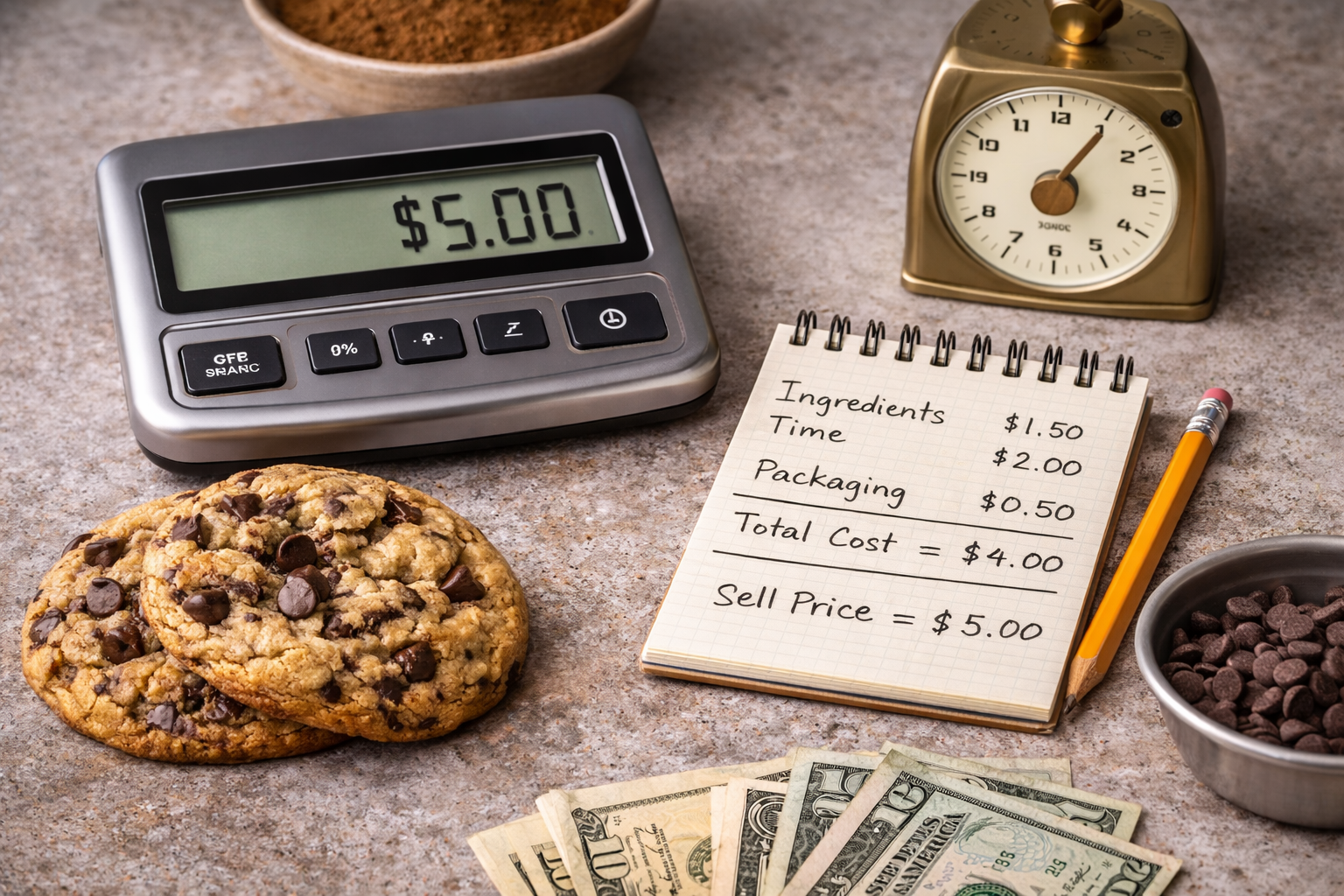
Pricing your baked goods is one of the hardest parts of starting a cottage bakery.
Not because it’s complicated—but because it feels personal.
You don’t want to charge too much.
You don’t want to scare people away.
And at the same time… you don’t want to burn out making $2 cookies.
If you’ve ever thought,
“I have no idea what to charge”
you’re not alone.
The good news? There is a way to price your baked goods that actually makes sense—and doesn’t leave you second guessing every order.
Here’s the Quick List
To price baked goods:
• calculate your ingredient cost
• factor in your time
• include packaging and overhead
• add profit on top
Pricing isn’t just covering costs—it’s making your business sustainable.

Why Pricing Feels So Hard
Most people start here:
👉 “What are other people charging?”
But here’s the problem:
• their costs aren’t your costs
• their skill level isn’t your skill level
• their business setup isn’t your setup
Copying prices is one of the fastest ways to undercharge.

What Goes Into Your Pricing?
Before you pick a number, you need to understand what you’re actually charging for.
1. Ingredients
This is your base cost.
• butter
• flour
• sugar
• chocolate
• eggs
Even small differences here matter.
2. Your Time
This is the one most people skip.
Your time includes:
• mixing
• scooping
• baking
• packaging
• cleanup
If you don’t pay yourself, your business won’t last.
3. Packaging
Don’t forget:
• boxes
• bags
• labels
It adds up quickly.
4. Overhead
Even at home, you have costs:
• electricity
• supplies
• equipment wear
You don’t need to overcomplicate this—but it should be included.

A Simple Pricing Formula (Beginner-Friendly)
Don’t overthink this. Start simple:
(Ingredients + Packaging + Overhead + Time) = Base Cost
Then:
👉 Add profit on top

Example: Pricing a Cookie
Let’s keep this realistic.
Say one cookie costs:
• ingredients: $1.00
• packaging: $0.30
• overhead: $0.20
• time: $1.50
Total cost:
👉 $3.00 per cookie
If you sell it for $3.00… you’re just breaking even.
To actually make money, you need to price above that.
Example:
👉 $4.50–$5.00 per cookie
Now you’re:
✔ covering costs
✔ paying yourself
✔ making a profit
Common Pricing Mistakes

Undercharging
This is the biggest one.
If your pricing doesn’t cover your time, it’s not a business—it’s a very expensive hobby.
Pricing Based on Fear
Lowering your prices because you’re worried people won’t buy usually attracts the wrong customers.
People who value quality expect to pay for it.
Copying Other Bakers
You don’t know their costs, margins, or goals.
Your pricing should reflect your business.
Forgetting to Adjust
Ingredient prices change.
Your skills improve.
Your pricing should evolve too.
How to Raise Your Prices
Raising prices feels scary—but it’s normal.
Start here:
• make small adjustments
• improve your product presentation
• communicate value (size, quality, ingredients)
Most people won’t question it as much as you think.
What If People Won’t Pay Your Prices?

This is a real fear—but here’s the truth:
Not everyone is your customer.
You’re not trying to compete with grocery store cookies.
You’re offering:
• homemade
• high quality
• bakery-style products
The right customers will see the value.
Pricing for Growth
As your business grows:
• your demand increases
• your efficiency improves
• your brand gets stronger
Your prices should grow with you.
What Comes Next?
Once you understand pricing, the next step is making sure you have the right tools and setup to stay consistent.
👉 Next: What You Actually Need to Start a Cottage Bakery
Pricing your baked goods doesn’t have to be perfect.
It just needs to:
✔ cover your costs
✔ pay you for your time
✔ allow you to keep going
Because at the end of the day, the goal isn’t just to sell cookies.
It’s to build something that actually works for you.
And that starts with pricing them right. 🍪